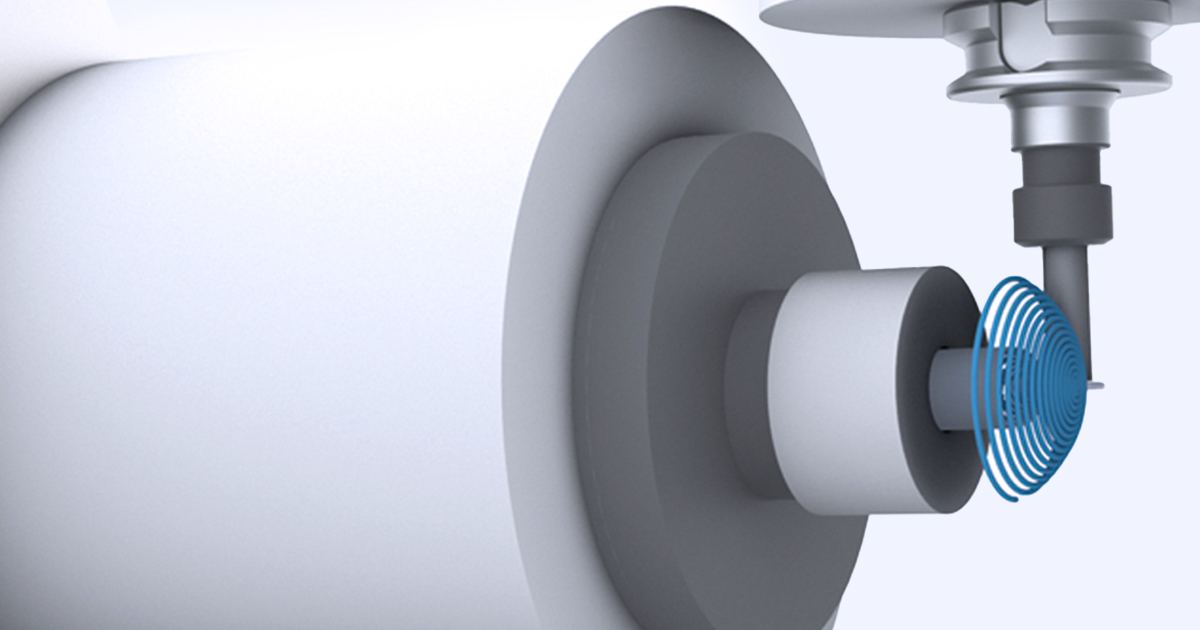
With increasing demand for medical devices, lighting solutions, and security and surveillance systems, the need for high-quality optical components such as Fresnel lenses, prisms, optical mirrors, lens arrays, and diffractive optics, along with their moulds and tools continues to grow. Manufacturing these components calls for precise toolpath generation, flexible process configurations, and reliable simulation and post-processing. ModuleWorks Ultra-Precision Machining (UPM) Optics provides the software components that support the programming and production of complex optical components.
Major Challenges
Need for Customization
The optics industry produces a wide variety of components with different surface forms, geometries, materials, and manufacturing requirements. Producing customized optical components efficiently requires flexible software that supports different types of geometry, machining processes, tools, and machine configurations.
Achieving High Quality
Optical components demand accurate form geometry and high-quality surface finishes. Toolpath calculation must account for the exact mathematical description of the workpiece and the requirements of the machining process, surface quality also depends on tool sharpness, feed rate, vibration isolation, machine stability, and the chosen process parameters. Built correctly, the software helps manufacturers work toward nanometer-scale surface finishes and sub-micron form accuracy.
Scarcity of Skilled Labor
Ultra-precision machining typically calls for highly experienced programmers and operators. Optics production in particular is still largely labour-intensive and built in small lots, sometimes one part at a time where full offline programming is often less practical than working directly on the shop floor. The shortage of skilled labour increases the need for software that simplifies programming, supports repeatable workflows, and lets manufacturers automate complex machining processes.
Solution Offered by ModuleWorks
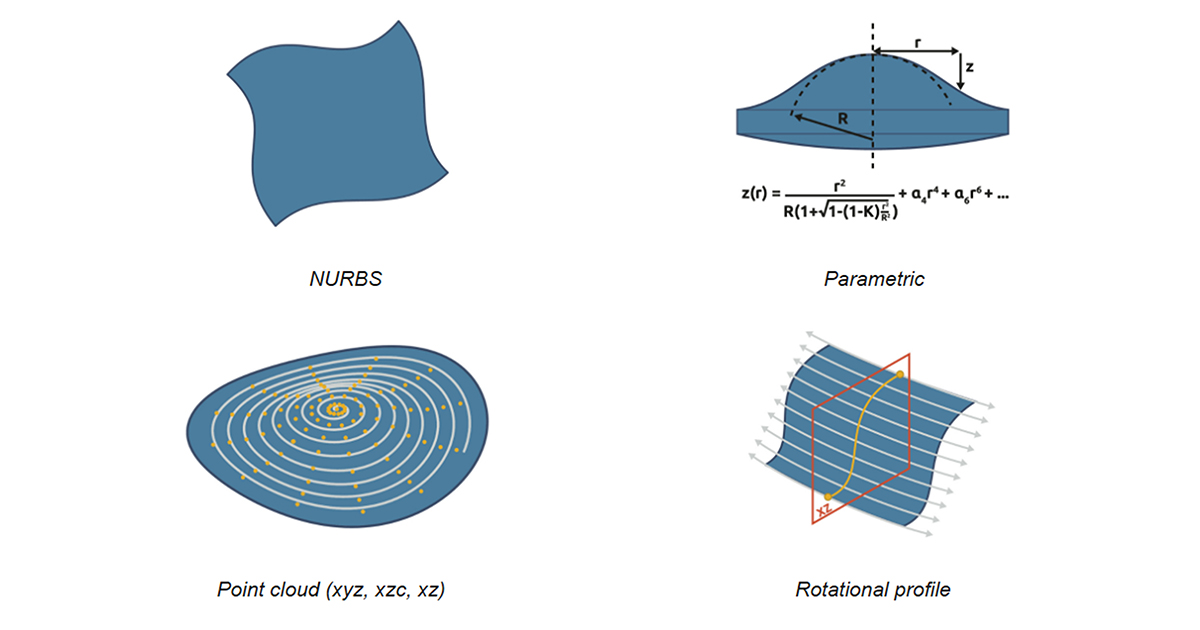
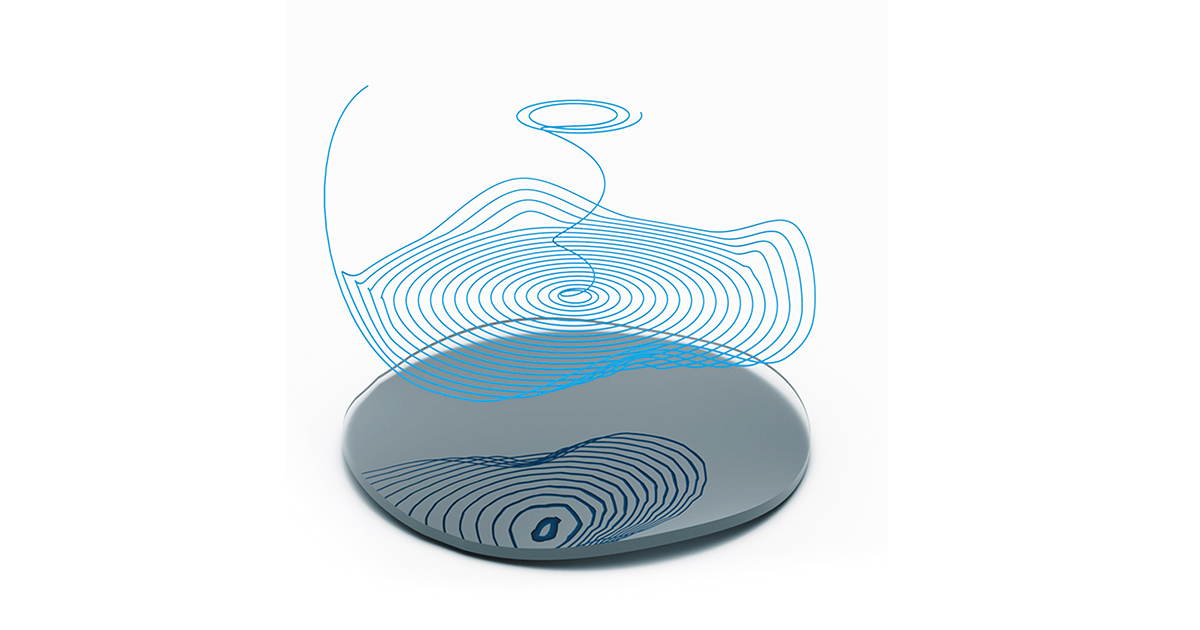
The ModuleWorks Optics package precisely calculates toolpath positions from the exact mathematical description of the workpiece geometry. It accepts NURBS, parametric surfaces, point clouds, rotational profiles, and profile curves as input, working with hybrid geometries in a single 3D CAM environment and handling challenging configurations such as non-tangential contacts with surface edges and dual or multiple contact situations.
The package covers ultra-precision machining processes including diamond turning (slow and fast tool), milling, fly cutting, grinding, polishing, drum machining, and diamond ruling. Toolpaths are calculated in neutral 3D space and converted to machine-specific output through the ModuleWorks Post Processor Framework. It also supports measurement data from interferometer and tactile metrology systems measured point grids, radial point grids, and point profiles, closing the loop between measurement and machining.
Supports solid NURBS (from STEP/IGES), parametric surfaces and equations, point clouds (XYZ, XZC, XZ), rotational profiles, and profile curves. The Parametric Surface Editor and surface library add a formula-based library for flat, sphere, asphere, torus, radial/XY/Zernike polynomial, sine surface, revolved curve, and user-defined formulas with operations for translation, tilt, rotation, trim, combine, multi-surface grid, and diffractive patterns, arranged on rectangular or hexagonal grids for lens arrays and structured optics.
Toolpath patterns for 2D and 3D machining of optical components, lenses, molds, and lens arrays. Radial patterns run 2-axis (X-Z) or 3-axis (X-Z-B), optionally adding a fast-tool axis; spiral and ring patterns scale from 3-axis (X, Z, C) up to 6-axis (X, Y, Z, A, B, C), also with an optional fast-tool axis.
Further patterns include one-way and zigzag (for reflectors, lens moulds and fixtures, metal-optic components), guide-curve-based (including ruling of holographic gratings), morphing between curves (for non-rotationally symmetric molds and diffractives), and five dedicated drum-machining patterns enabling single-point diamond turning along the diameter of drums.
Diffractive optics get dedicated 5-axis/5+1-axis support with full collision checking, parameterized half-radius tools, and automatic links between segments.
These patterns apply across turning, milling, fly cutting, grinding, polishing, and drum machining.
Multi-axis simulation with spindle and machine-head visualization supports collision checking, material-removal simulation, machining-time estimation, gouge and excess analysis, and tool-orientation optimization including GPU-accelerated material-removal and collision checking for significantly faster simulation than CPU-only calculation, across multi-channel machine setups of up to 6 axes per channel.
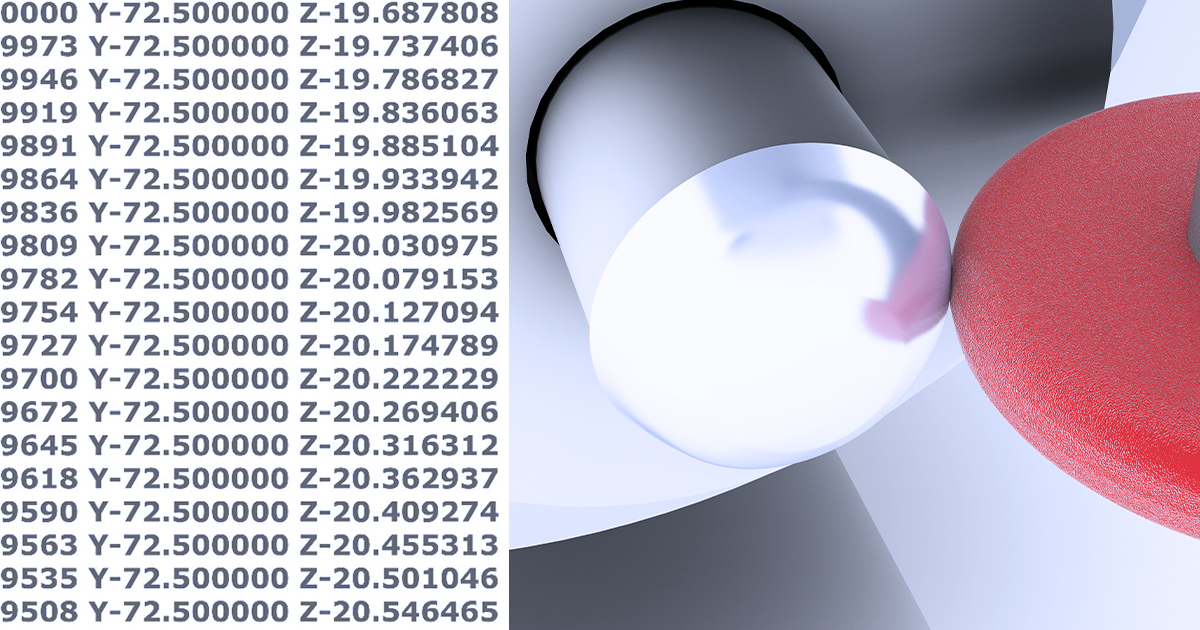
The ModuleWorks Post Processor Framework then delivers ultra-accurate, high-speed post-processing of toolpaths streaming over 50,000 move points per second, 15 million toolpath points in under 10 minutes, even on standard hardware for machine-specific, ready-to-run NC output.
Key Highlights
Enhanced Performance
Multi-threaded, 64-bit algorithms calculate machine-adapted toolpaths quickly, even for complex optical components. A unified approach lets conventional CAM technologies and specialized optics toolpaths work side by side in the same manufacturing workflow.
Process Configurations
A broad range of process configurations in one package: turning with slow and fast tools, milling, fly cutting, grinding and polishing, drum machining, diamond ruling, and dedicated 5-axis / 5+1-axis machining for diffractive optics with full collision checking with multi-surface machining, lens-array support, and customized tool definitions for complex optical geometries.
Automation Framework
Optics production often involves repetitive manufacturing of similar lens families on the same machine. While each lens may require a different surface equation, the underlying machining operations and process settings can remain consistent. The ModuleWorks Automation Framework addresses this by scripting specific industrial workflows in Python on top of ModuleWorks’ own toolpath and simulation core, in three modes:
Expert mode targets offline-programming specialists: a wide parameter range for highly customized, complex applications, using CAD/CAM functionality to generate input geometries, with template inputs serialized for reuse in Operator mode.
Operator mode reduces the need for highly experienced users on repetitive, rule-based jobs, with an intuitive touch-screen HMI, application presets radial turning, slow- or fast-tool turning, grinding, D-mould manufacturing, and more compatibility with the Parametric Surface Editor, customizable branding, and multi-language support.
Headless mode runs seamlessly with no UI interaction at all: lens type or parameters selected via barcode scanner or RFID, job data fed in through OPC-UA integration, and toolpath generation, simulation, and posting running end to end unattended. A one-time surface-library and operation setup is enough to keep automated path planning running afterward.
Key Benefits
Advanced multi-threading 64-bit algorithms deliver ultra-fast calculations for machine-adapted toolpaths, enhancing production efficiency
Optical machining patterns, based on NURBS, analytical formulas, or point clouds, significantly enhance process accuracy
Comprehensive support for a wide range of processes including turning, grinding and milling