

The 2026.08 release sharpens roughing, turning, and finishing with consistent zigzag cutting, thin-wall-aware Adaptive Roughing, and safer Cut-Off turning via automatic Gouge Check. Finishing gains precise corner patterns, engagement control, and stock-based containment, while Smart Measure and GPU rendering extend inspection accuracy. PPFramework Version 3 and enhanced automation streamline NC output for higher-quality manufacturing.
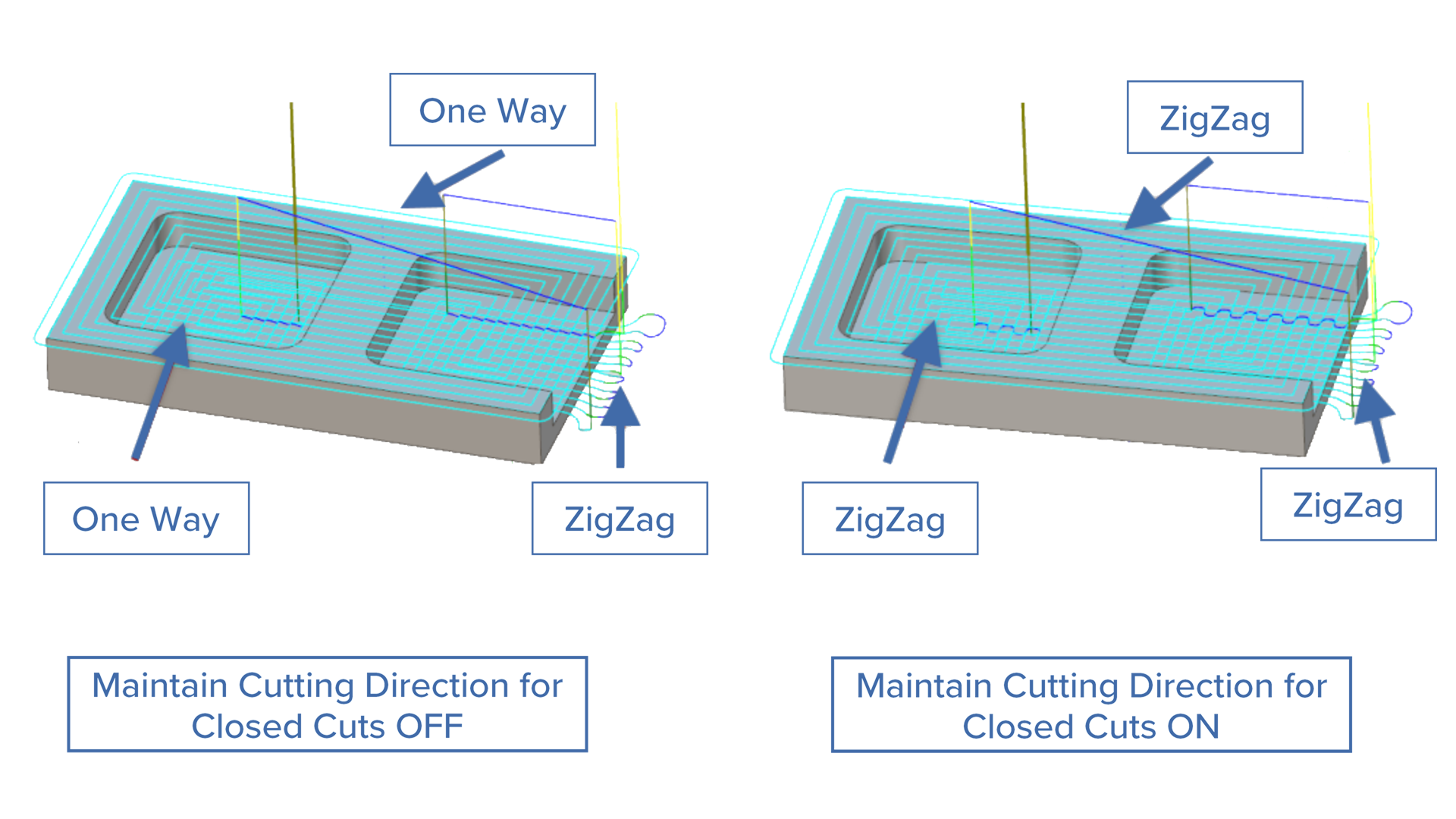
Challenge: Previously, when users selected the zigzag cutting method for multi-axis area roughing, only the open cuts were machined in the zigzag direction. All the closed cuts were machined in one direction by default.
Solution: This new option lets users apply the zigzag cutting direction to closed contours, ensuring consistent cutting behavior across both open and closed cuts in the offset pattern.
Benefits: This new option gives users a consistent, predictable cutting behavior across all contour types, reducing the need for manual workarounds and improving surface consistency on closed pocket walls.
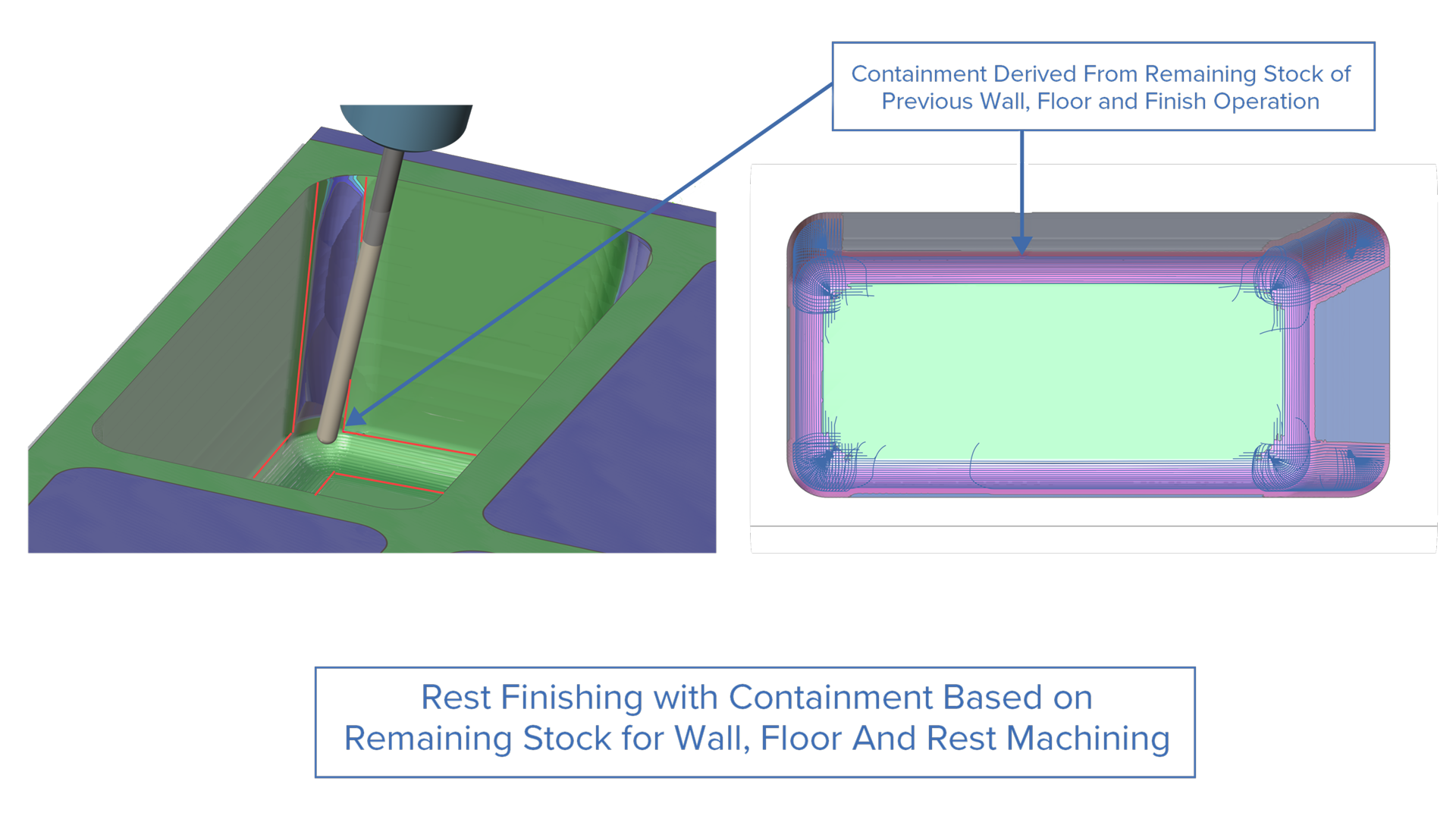
Challenge: Rest finishing requires accurate containment of the remaining stock material left after previous operations, making setup challenging because identifying these areas is often time-consuming, error-prone and difficult to control efficiently.
Solution: With this new feature, users can extract containment curves directly from the remaining stock mesh of previous operations and the target part geometry. This produces more accurate containment than earlier methods, without manual boundary definition.
Benefits: With this feature, users achieve more accurate containment curves compared to previous methods, leading to faster setup (no need to compensate for imprecise containment) and improved surface quality on rest-finished areas.
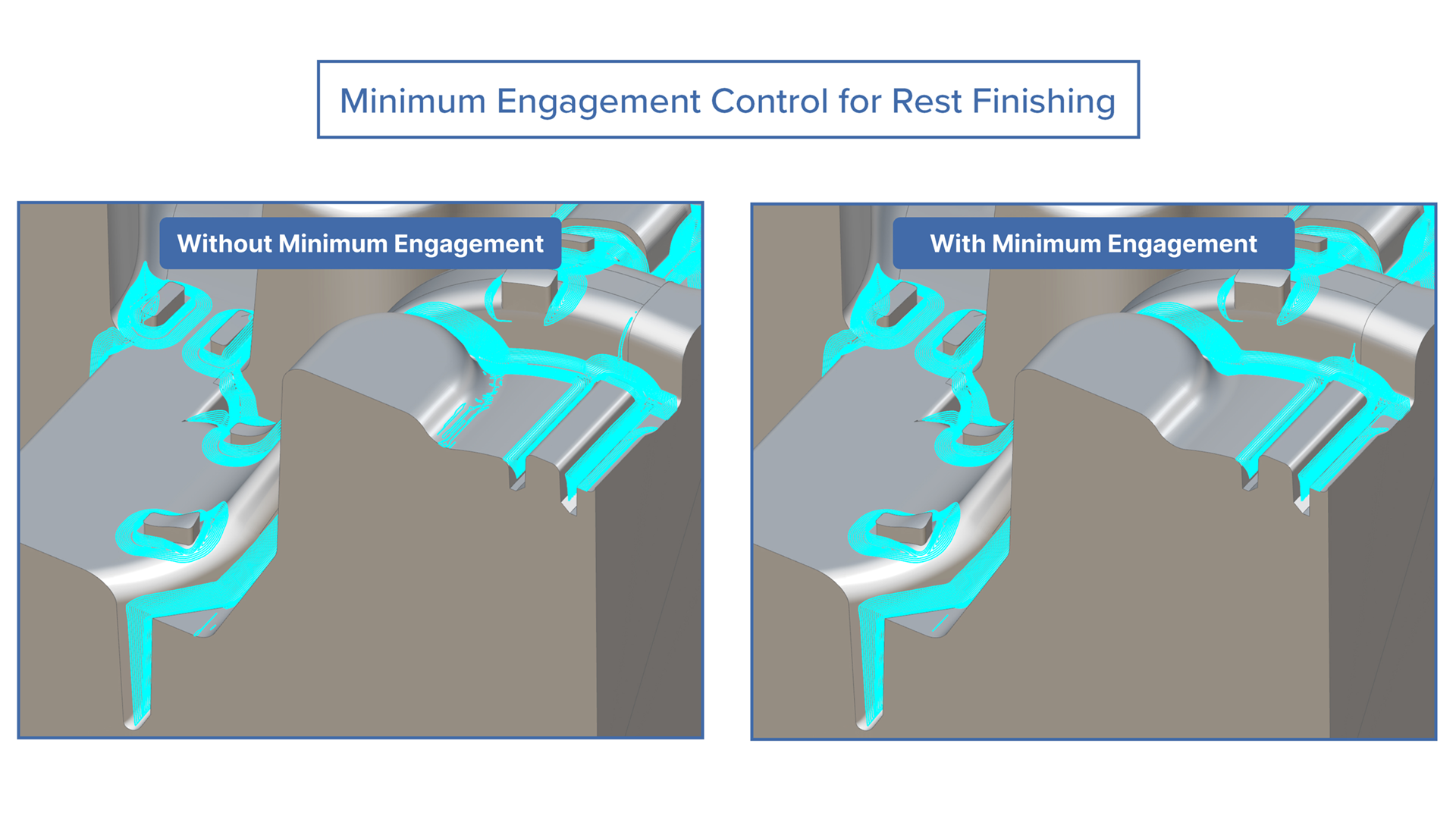
Challenge: During Rest Finishing, areas with minimal remaining material generate short, inefficient toolpath fragments that add cycle time without contributing meaningful material removal.
Solution: Users can define a minimum engagement threshold to exclude toolpath segments where remaining material is too small for effective cutting. Segments falling below this threshold are automatically removed, reducing air cutting and keeping the toolpath focused on meaningful material removal.
Benefits: This feature reduces cycle time by eliminating unnecessary toolpath segments with minimal material engagement, while giving users precise control over rest machining areas to ensure only productive cuts are executed.
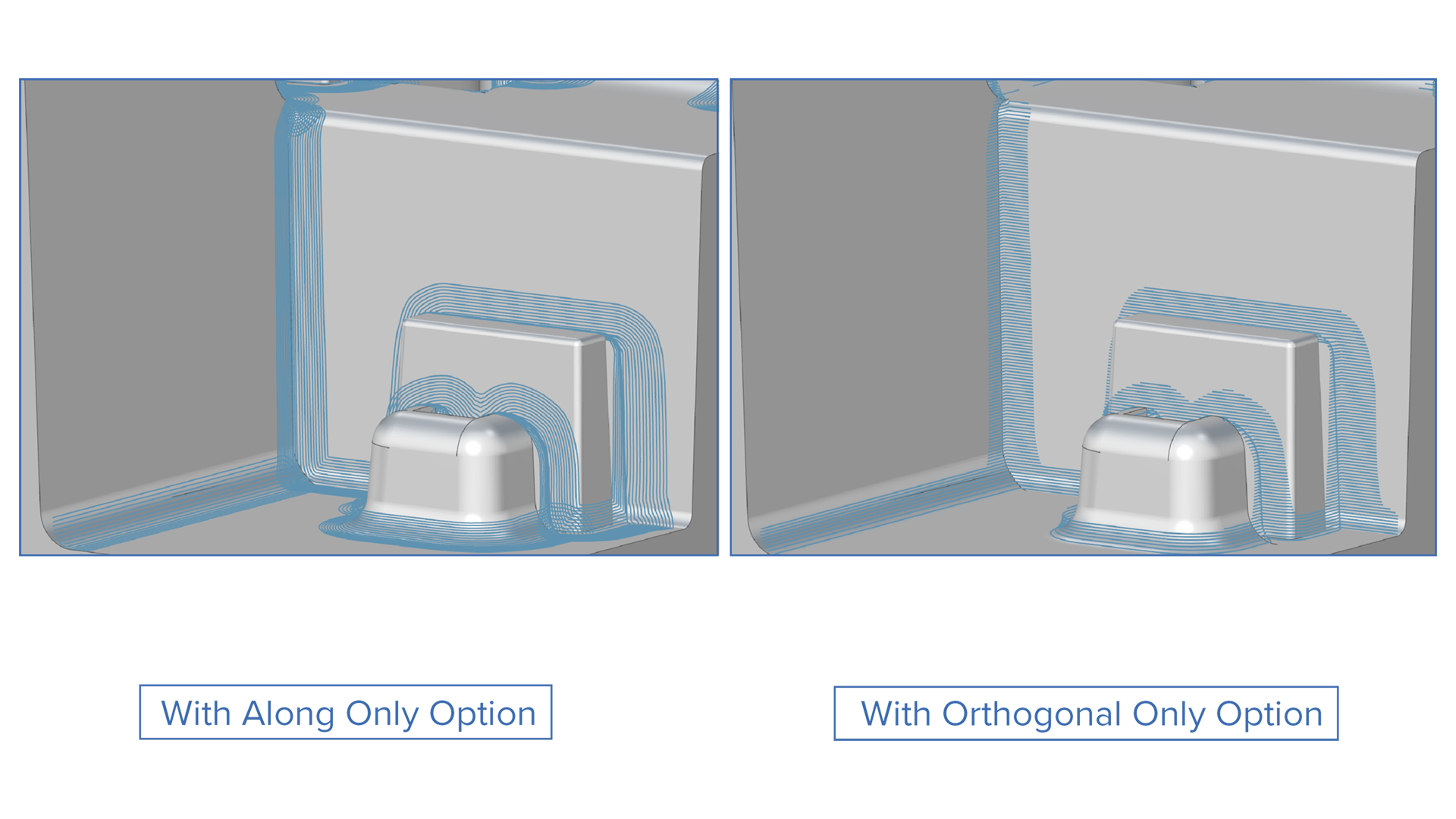
Challenge: Without a pure Orthogonal option, Corner Finishing is limited to Along or Along-and-Orthogonal patterns. On complex parts, this can prevent the main finishing direction from aligning with the optimal across-corner direction, leading to less consistent cusp orientation and surface finish in tight or highly curved corner regions.
Solution: The new Orthogonal-only pattern restricts tool movement to directions strictly perpendicular to the machining direction. This is useful where along-based patterns would otherwise produce suboptimal results.
Benefits: Select the pattern that best fits your part geometry; the Orthogonal-only option reduces the risk of surface marks or poor tool engagement in corners where along-direction motion is unsuitable.
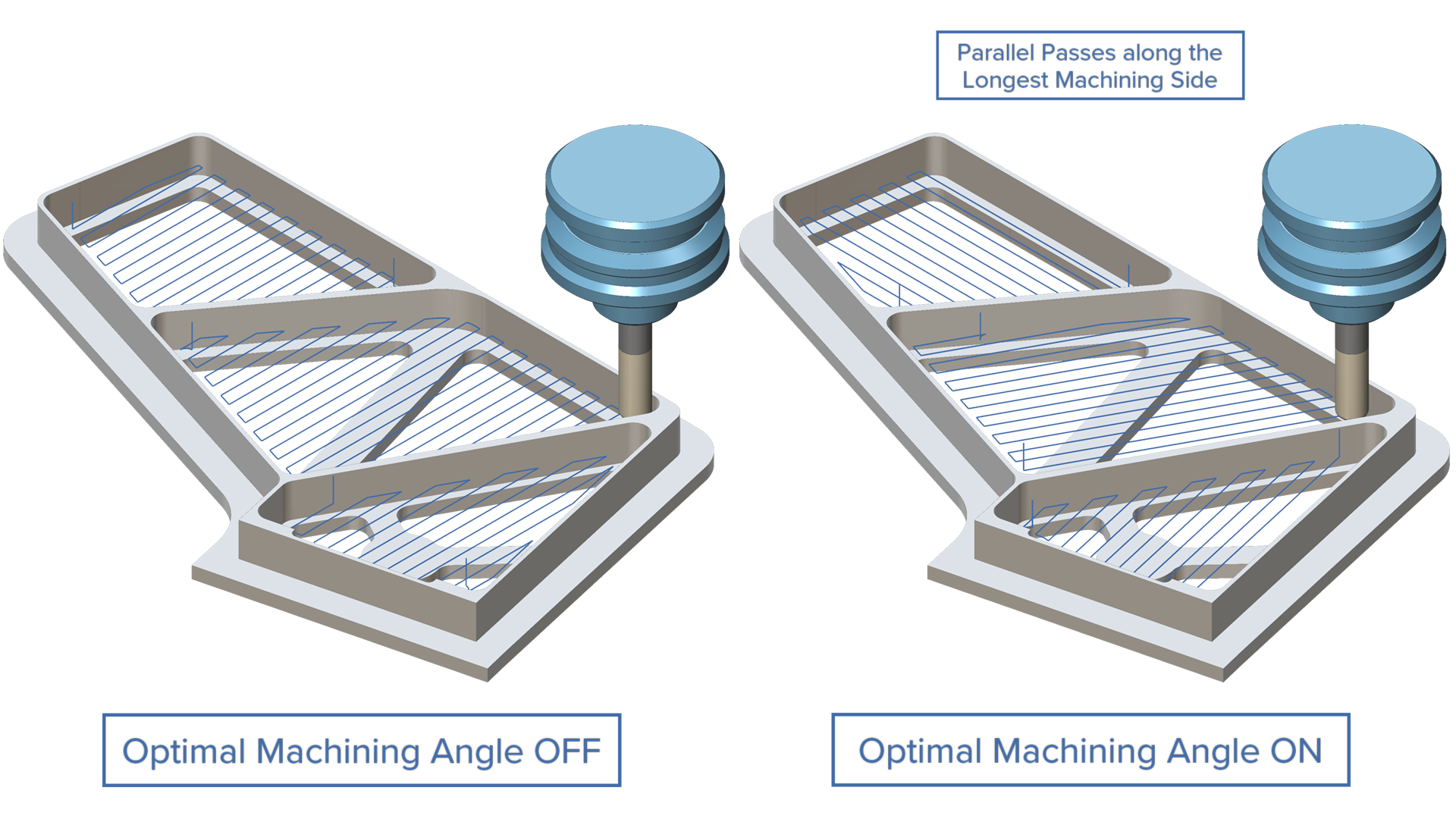
Challenge: Machining at a non-optimal angle produces shorter passes, increasing direction changes and accelerating tool wear – raising both machining time and manufacturing costs.
Solution: This feature automatically evaluates each region and selects the angle that aligns parallel passes along its longest dimension, maximizing pass length and minimizing unnecessary tool movements.
Benefits: This feature reduces machining time by minimizing redundant passes and direction changes while extending tool life through more even wear distribution across optimally angled cuts.
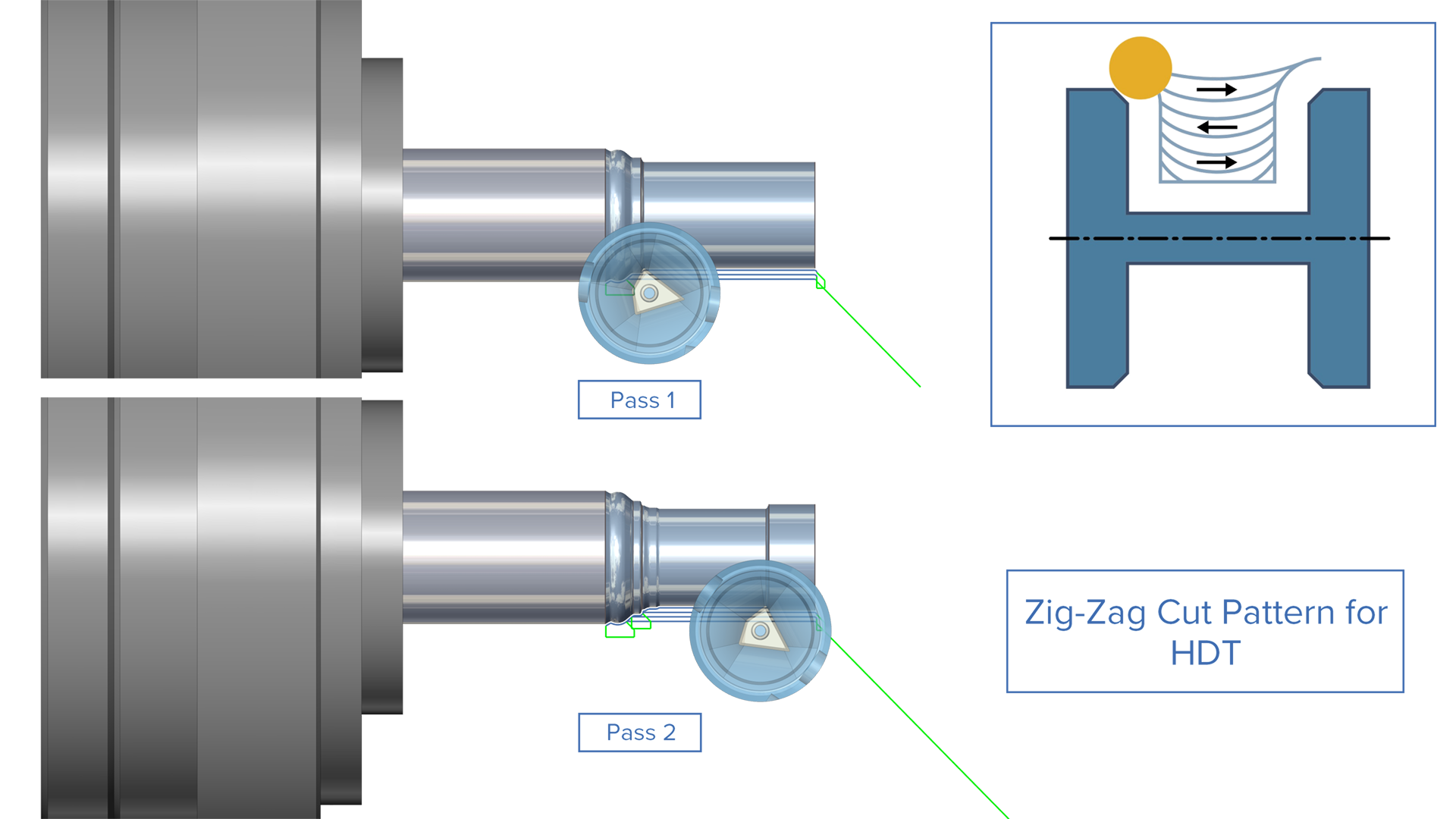
Challenge: The HDT rough cycle previously supported only one-way cutting: After each pass, the tool retracted and repositioned before engaging again in the same direction. This increased non-cutting time, reduced productivity and left multi-directional tools such as FreeTurn underutilized.
Solution: Now, there is an option to define the zigzag cut pattern in High Dynamic Turning, which helps maintain dynamic engagement control and consistent cutting conditions.
Benefits: With the support for multi-directional cutting, unnecessary repositioning moves are eliminated, improving material removal efficiency and reducing roughing time.
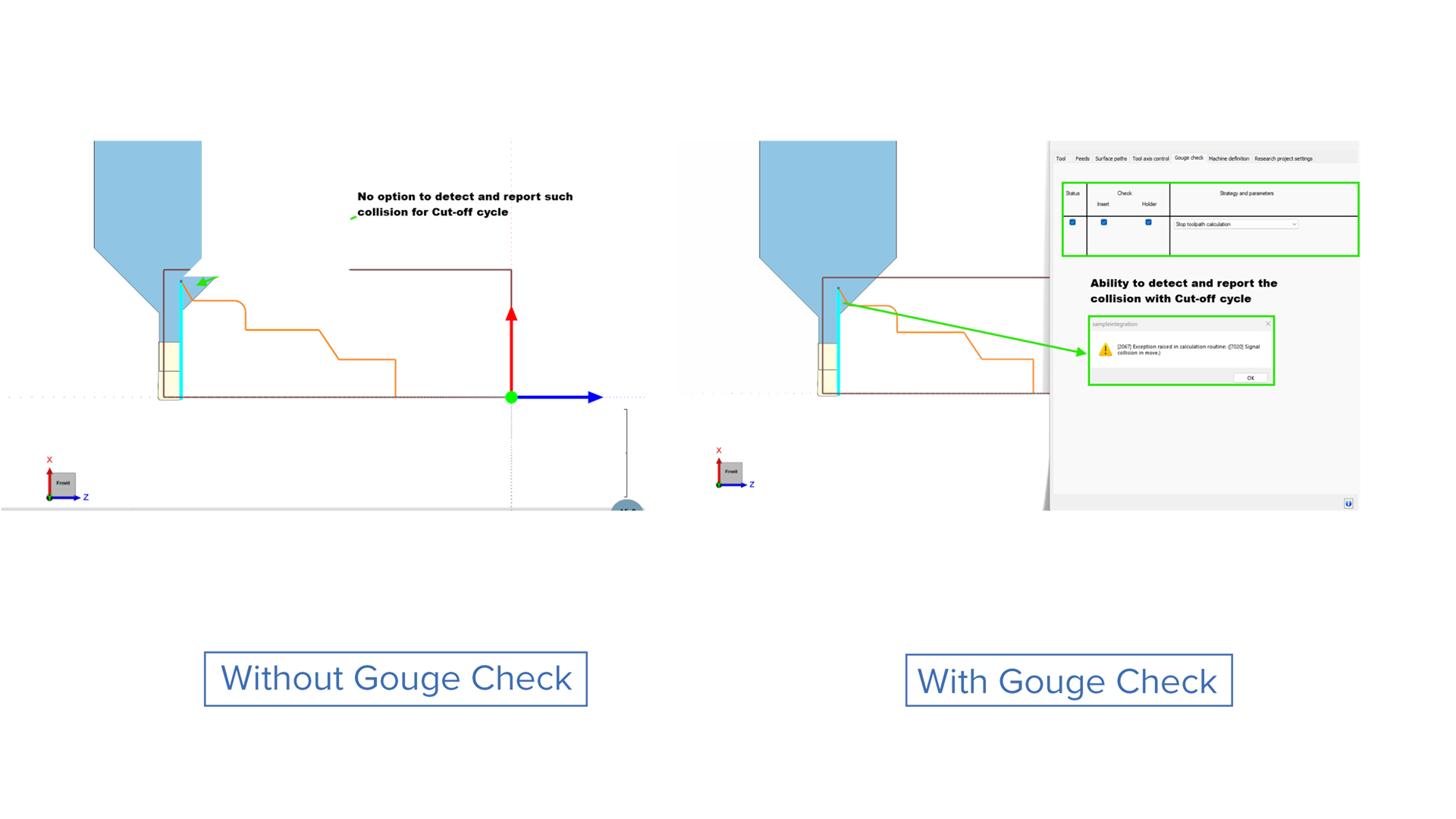
Challenge: During cut-off operations, complex insert or holder geometries can interfere with the part contour. Previously, users had limited control over gouge handling during toolpath generation, leading to unexpected collisions, manual rework and inefficient trial-and-error programming.
Solution: A new Automatic Gouge Check has been added to the Cut-Off turning cycle to improve safety and efficiency by detecting insert or holder interference during toolpath generation. When interference is found, the system issues warnings and offers options to manually correct the toolpath or automatically trim and re-link the affected segments.
Benefits: This feature eliminates collision risks in cut-off programming with a fully automated solution. Keep inserts and holders safely clear of the part, while automatic Trim and Re-Link handles collision resolution, reducing programming effort, speeding up workflows, and protecting your tools.
Challenge: When machining parts with open ends or convex corners, toolpaths often produce L-shaped extensions at boundaries and sharp path edges at corners. This forces the machine to decelerate unexpectedly, leading to poor cutting conditions, accelerated tool wear and limited control over how different corner types are handled.
Solution: Open ends and convex corners are now processed independently, giving users separate control over each. Open-end extensions are calculated to avoid L-shaped paths, and an automatic smoothing option rounds convex corners to eliminate sharp direction changes in the toolpath.
Benefits: With independent control over open-end and convex-corner behavior, users can reduce tool wear, avoid sudden decelerations and maintain smoother wall transitions.
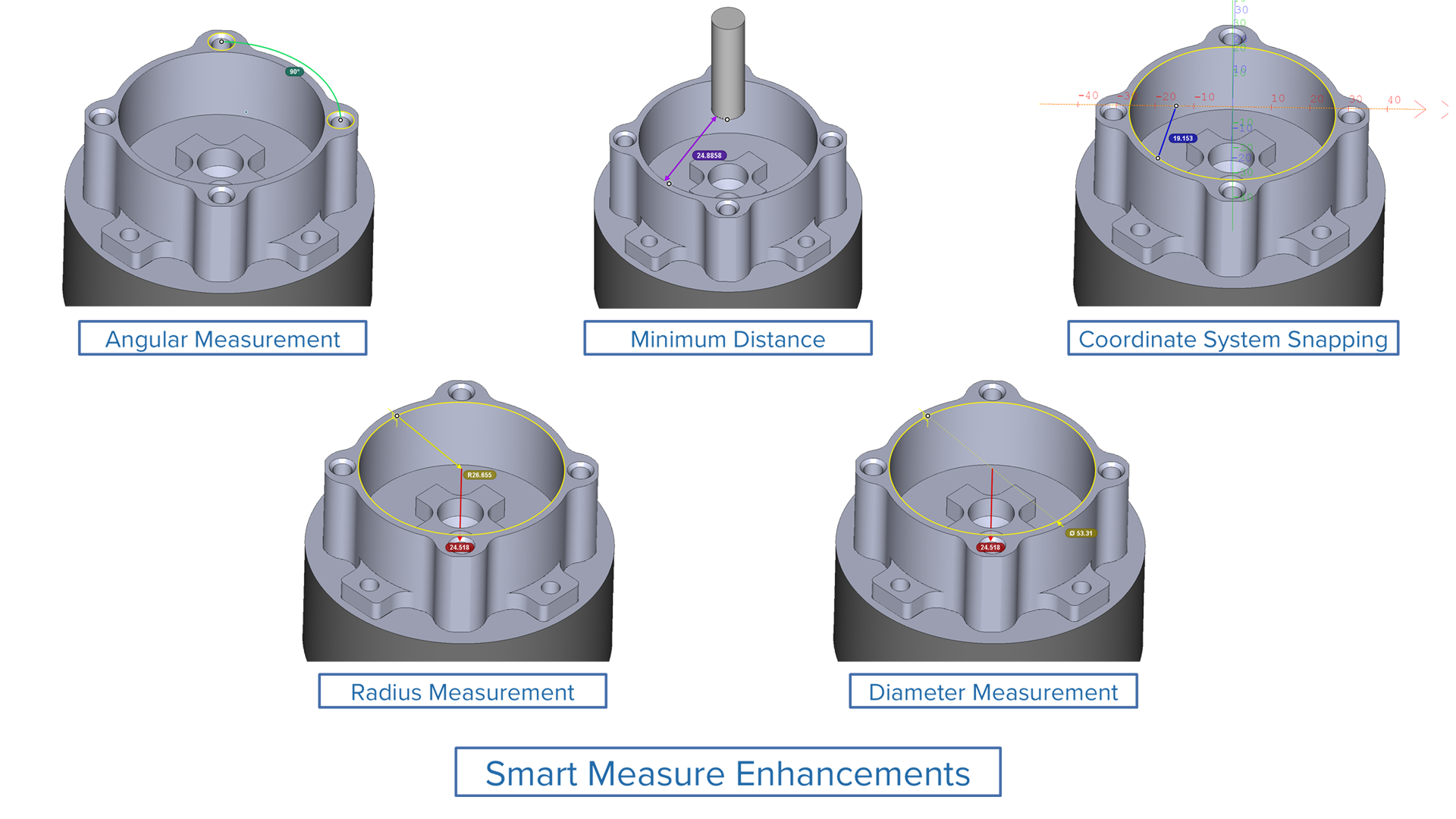
Challenge: Previously, performing precise measurements on complex geometries was time-consuming due to limited snap points and lack of automated distance detection, requiring users to manually identify reference geometry and measure hole features, angular relationships, or minimum distances.
Solution: Smart Measure now includes additional snap points for coordinate system origins, angular distance measurements, flexible radius/diameter display for hole features, and automatic minimum-distance detection between curves – reducing manual selection steps throughout geometry inspection.
Benefits: This enhancement improves measurement accuracy and control, increases efficiency by reducing manual interaction, provides flexibility in measuring hole features, and simplifies the identification of minimum distances between geometric entities.
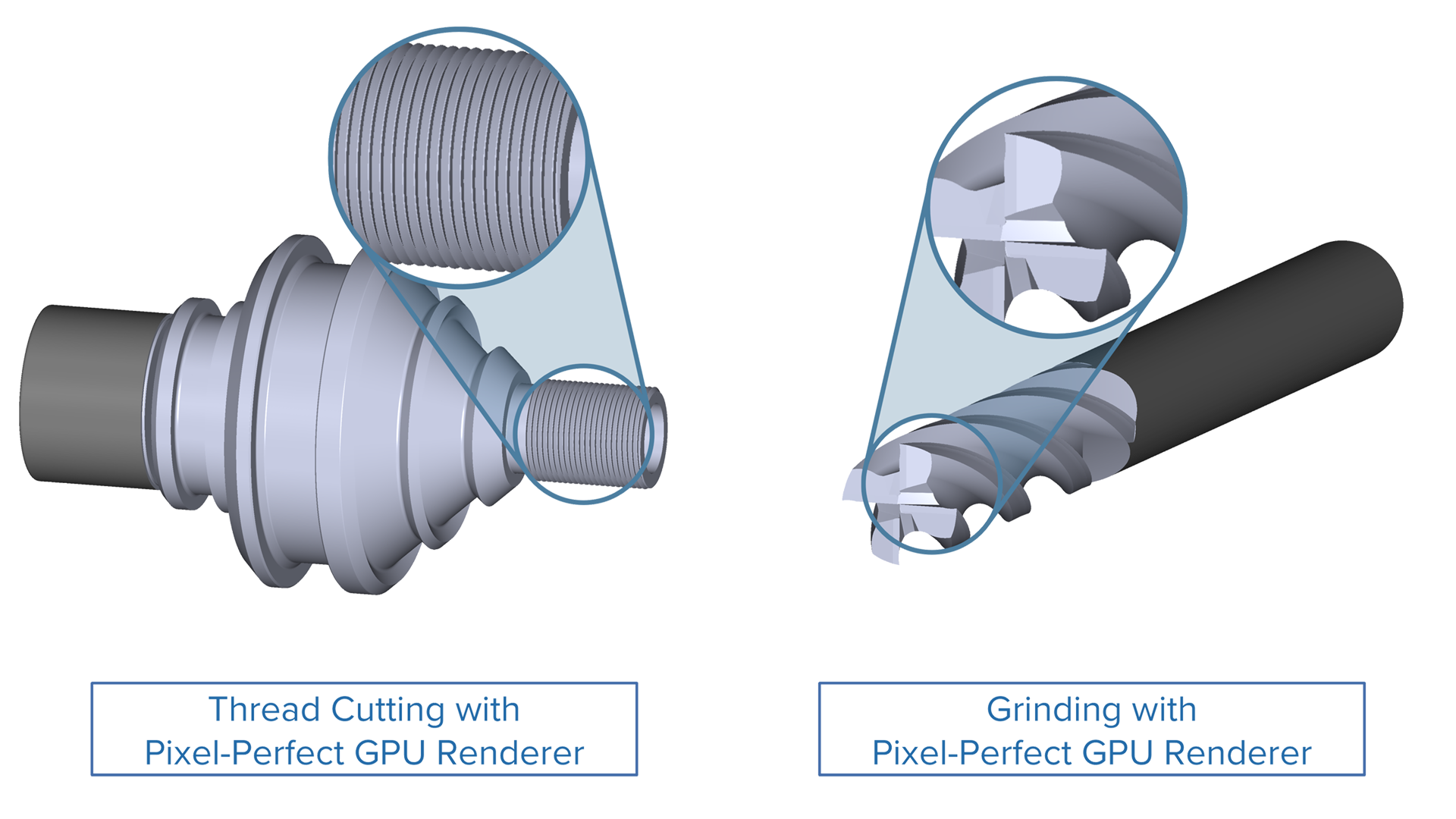
Challenge: Standard rendering modes often lack the visual accuracy required for high-accuracy machining validation and detailed inspection, particularly for parts combining milling, turning, thread cutting and grinding operations. Fine geometric features and surface details can be difficult to analyze accurately using conventional rendering approaches.
Solution: This update extends the Pixel-Perfect GPU Renderer to support thread cutting and grinding operations, enabling high-resolution visualization and inspection across additional machining processes.
Benefits: This enhancement enables highly detailed inspection of thread cutting and grinding results with pixel-level accuracy, allowing users to detect surface defects, undercuts and fine geometric features consistently across mixed-process parts within a single simulation environment.
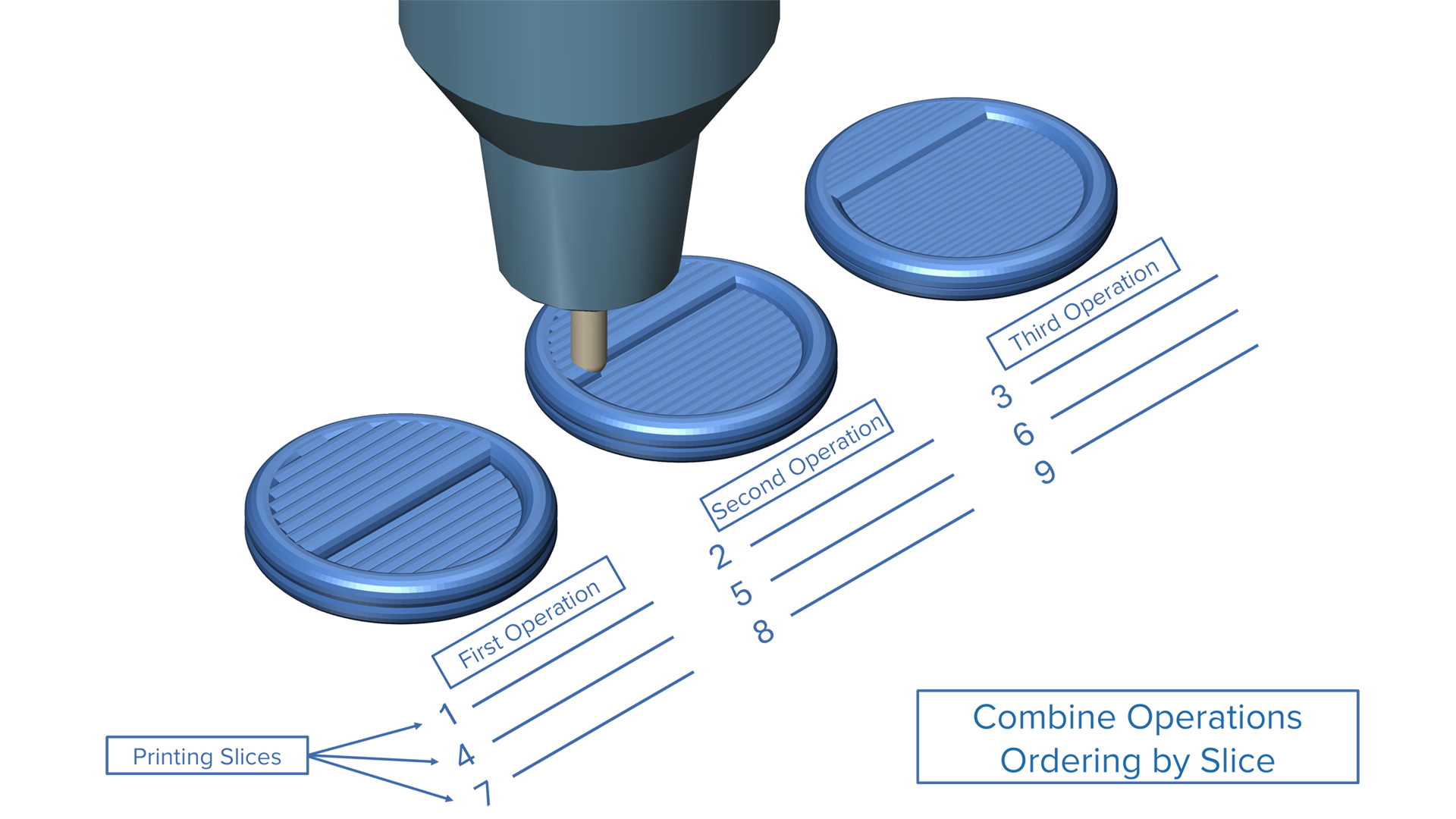
Challenge: Previously, sorting in Combine operations was limited to layer-by-layer or operation-by-operation sequencing, which was too coarse for heat-sensitive processes. This limited control over deposition order made it difficult to manage local heat buildup, leading to potential distortion and reduced part quality.
Solution: A new path-by-path sorting mode sequences deposition at the individual path level rather than layer by layer or operation by operation. After completing one path, the process can move to a different region before returning, giving users direct control over local heat input at the finest resolution available in the Combine operation.
Benefits: This enhancement provides precise control over local heat input, enabling effective cooling strategies, reducing distortion, improving microstructure, and ensuring better overall part quality in heat-sensitive processes.
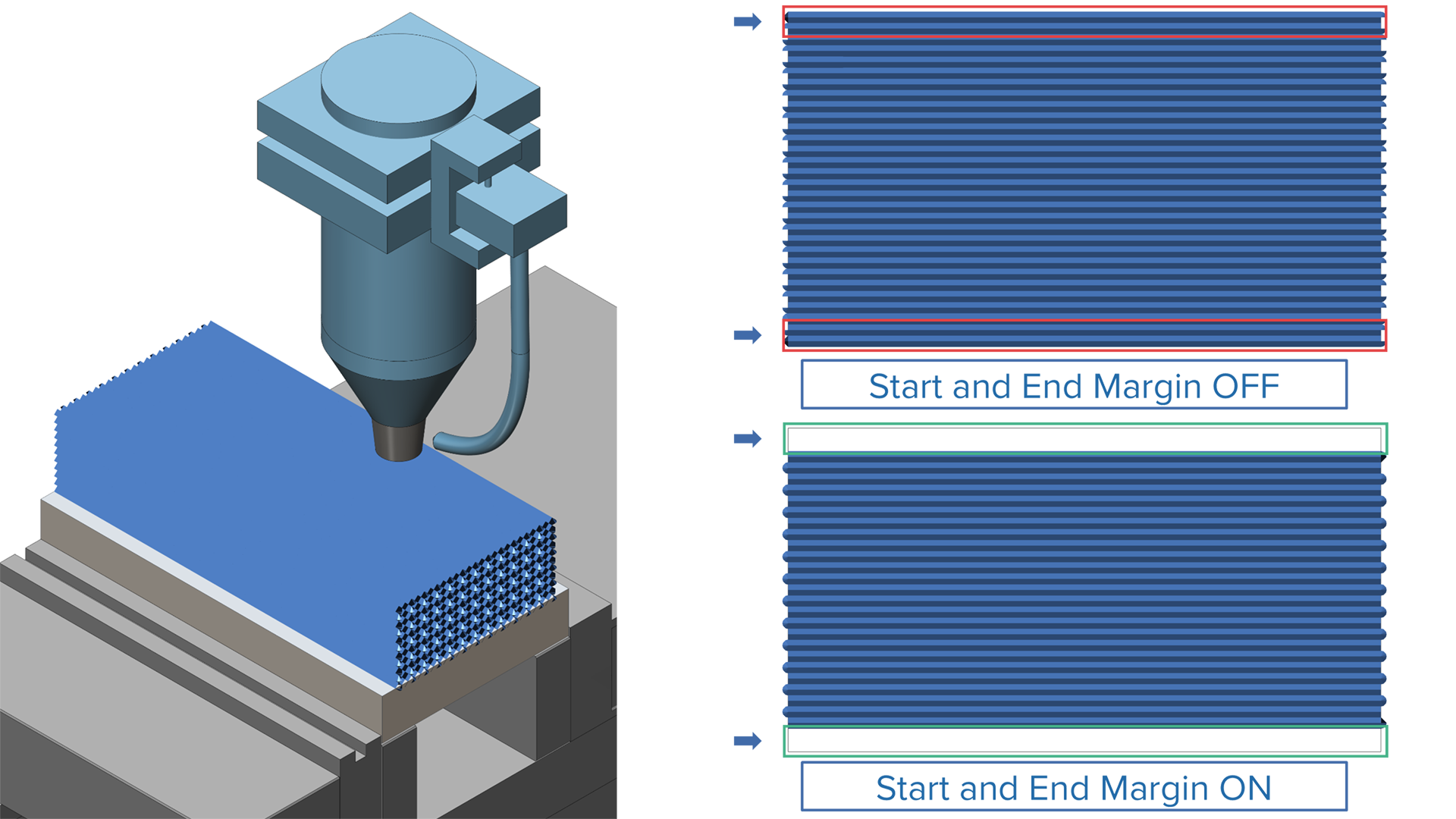
Challenge: Previously, achieving offsets required modifying the CAD model, leading to inconsistencies between the designed and manufactured part. Additionally, morphing between geometries with significant shape differences resulted in short path segments that caused deposition issues, and the limitation of only two input geometries restricted control over intermediate path shapes.
Solution: Start and end margin parameters have been added to define offsets directly within the pattern strategy, support for multiple input geometries has been introduced to guide path evolution more precisely, and an auto-morphing option has been implemented to generate smoother transitions and avoid short segments.
Benefits: This enhancement eliminates the need for CAD model modifications, improves path quality through better control of intermediate geometries, and ensures smoother transitions with fewer start-stop events, resulting in more consistent and reliable deposition.
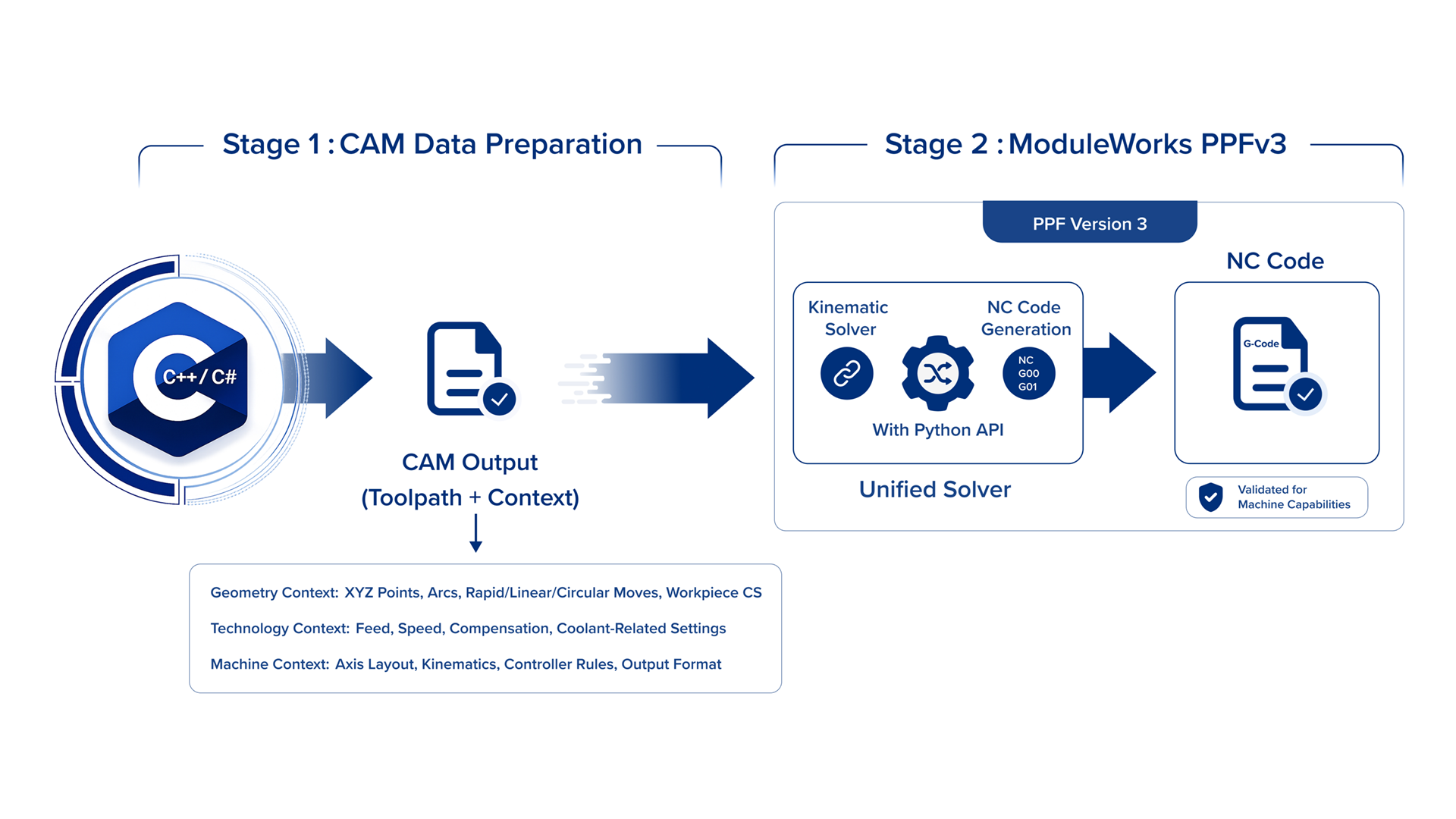
Challenge: The previous machine generation framework had a solid foundation but struggled with modern workflows — Python integration was cumbersome, static data types limited flexibility, and simulation, plotting, and testing were fragmented. On top of that, even the new generic PPF core couldn’t directly use ModuleWorks-specific capabilities like advanced toolpaths and MultiXPost kinematic solvers, so developers couldn’t fully leverage ModuleWorks intelligence from within the post.
Solution: PPFramework Version 3 redesigns the core with a modular, Python-integrated architecture that unifies toolpath calculation, kinematics, simulation, and NC code generation, while the ModuleWorks Extension bridges this core with the ModuleWorks ecosystem — bringing ModuleWorks toolpaths and MultiXPost kinematics directly into the post, linking NC commands with kinematic behavior, and enabling configurable, reusable machine-aware setups.
Benefits: Together, they give developers and integrators faster Python integration, flexible custom data structures, and unified APIs for consistent CAM-to-NC data handling and control over NC output. This results in improved accuracy, quicker development cycles, better visibility into machine behavior for testing and optimization, and the ability to build fully connected, machine-aware applications spanning CAM, simulation, and NC — on a scalable foundation for evolving machines and processes.
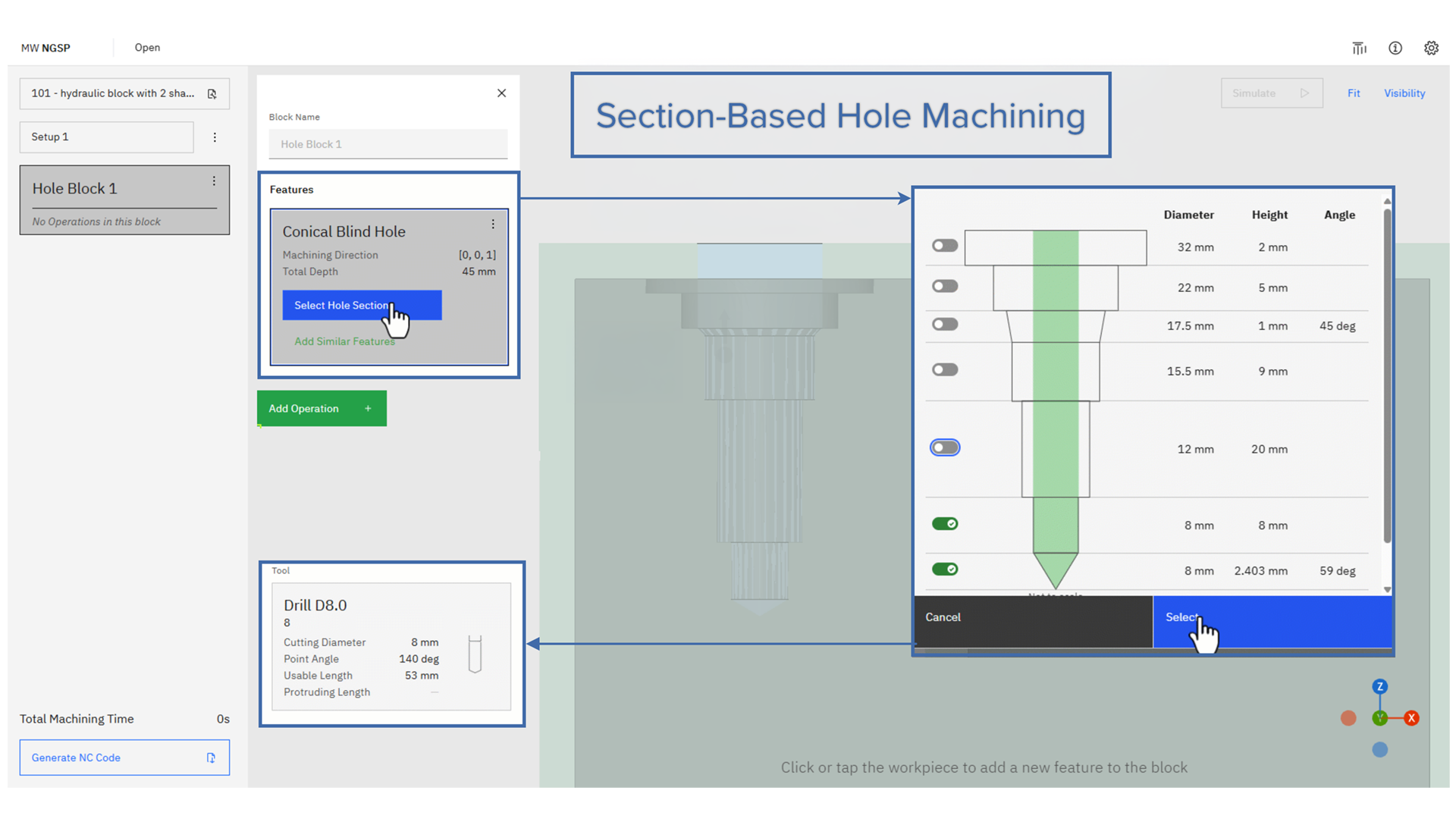
Challenge: Complex hole geometries often require different machining strategies for different sections, but traditional approaches force users to treat the entire hole as a single entity, limiting flexibility and precision.
Solution: Building on existing hole-creation capabilities, this feature extends the workflow to support individual hole sections. Each section is now a standalone machining target, seamlessly integrated into the familiar process.
Benefits: Users no longer need to manually track or define the Z-start position, as NGSP automatically accounts for the current stock situation. Individual sections can be re-machined independently, making targeted operations like reaming or threading straightforward and efficient. When needed, Z-levels for each section can also be adjusted individually, giving users the flexibility to fine-tune their machining strategy without affecting the rest of the hole.