



ModuleWorks 2026.04 is introducing a new generation of intelligent toolpath, simulation, and shopfloor programming features that remove key bottlenecks in roughing, finishing, turning, verification, and on‑machine programming. From chip‑load‑aware VoluMill roughing and adaptive stock detection to Constant Chip Thickness turning, GPU‑accelerated simulation, and a web-based NGSP client, this release delivers safer processes, shorter cycle times, and a flexible, device‑independent user experience for modern manufacturing workflows.
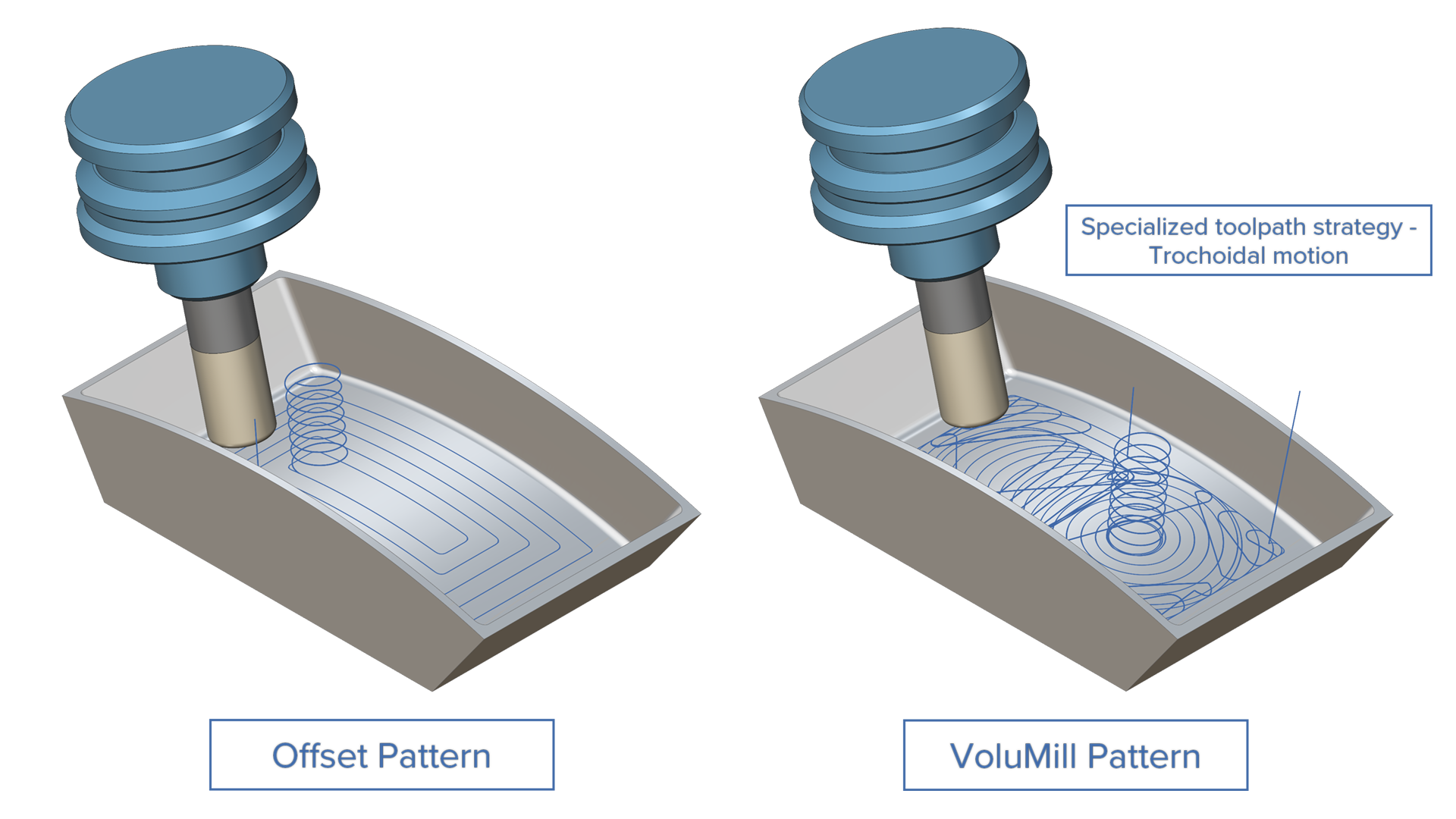
Challenge: Conventional offset patterns can sometimes collapse on specific geometries, e.g. corners, closed pockets and pass-over transitions. This can lead to tool overload, increased wear, reduced surface quality and higher risk of tool failure.
Solution: The VoluMill pattern actively monitors chip load and tool engagement and applies strategies such as trochoidal cutting or controlled openings to reduce tool load where needed.
Benefits: This new feature significantly reduces the risk of tool overload while maintaining a high percentage of constant-width cuts. This ensures steady chip load and high cutting efficiency. It also allows higher higher feed rates without compromising tool safety.
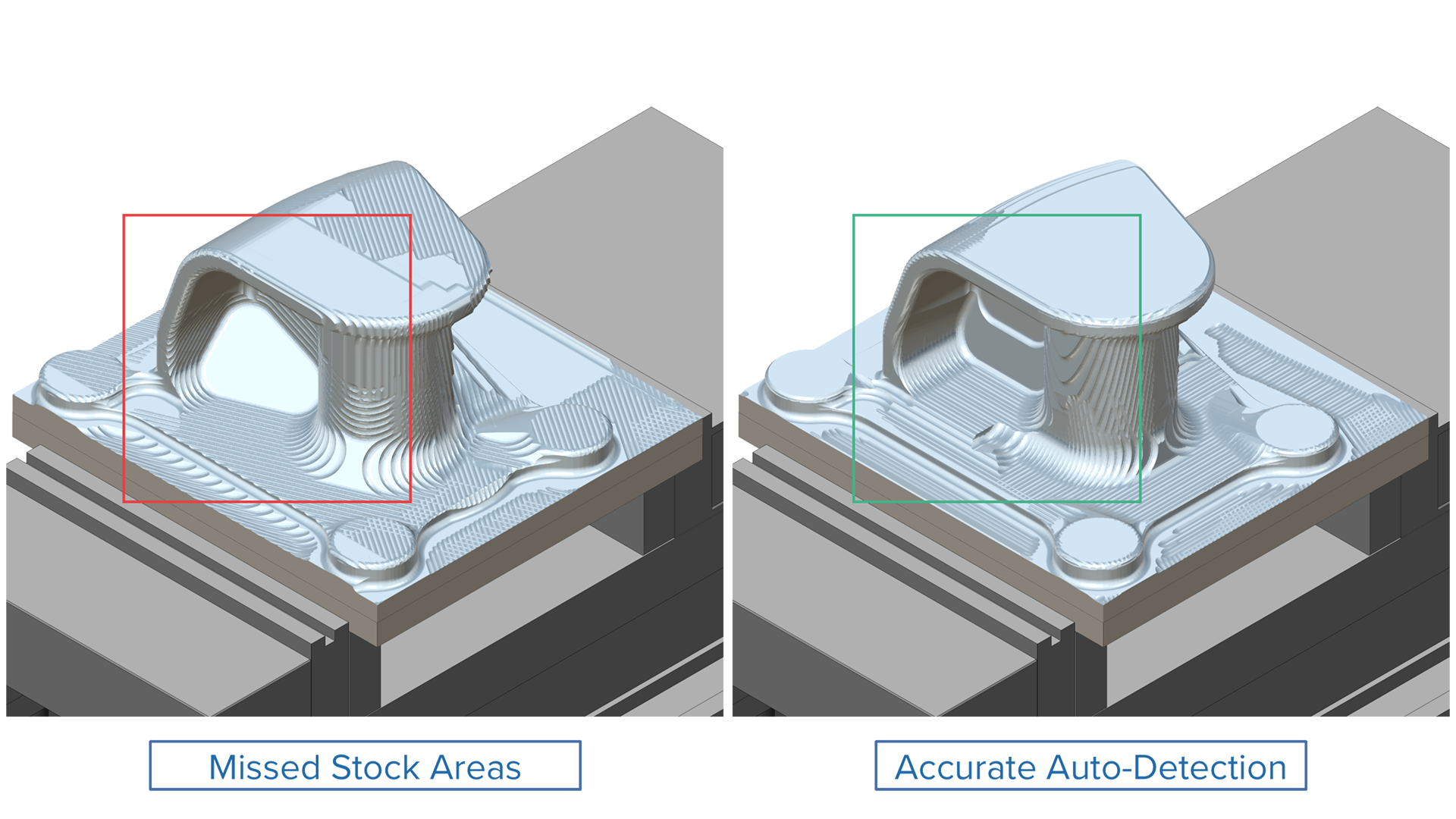
Challenge: Traditional stock‑detection algorithms can miss or misinterpret remaining material, leading to inefficient machining and extra setup time.
Solution: The system automatically analyzes maximum removable stock volume from multiple directions to identify the optimal machining approach, eliminating guesswork and providing consistently accurate material recognition without manual intervention.
Benefits: Eliminate manual direction verification and setup adjustments while achieving consistently reliable machining outcomes. Programmers can trust automated direction selection, reducing rework cycles and accelerating time-to-production.
Challenge: The offset patterns frequently resulted in full-width cuts, particularly within narrow or enclosed geometries like threaded or extruded features. This increased tool stress, reduced tool life and limited overall machining efficiency.
Solution: The VoluMill pattern adapts the toolpath dynamically to maintain consistent tool engagement throughout the cut — automatically steering around the narrow slots and enclosed areas where offset patterns would otherwise produce damaging full-width cuts.
Benefits: The VoluMill pattern removes material more efficiently and extends tool life by avoiding full-width cuts. This improves machine tool performance and facilitates customer acceptance by using a proven industry-standard pattern.
Challenge: Wall finishing operations require guide curves or planar floor surfaces to define toolpath patterns. When there is no suitable floor surface near the machining area, users cannot generate reliable finishing passes or achieve consistent surface quality.
Solution: With this feature, users can precisely define the position of constant height passes, independent of the existing geometry. A convenient Constant Z mode is available, along with a customizable plane definition for cuts in any direction.
Benefits: Users can machine wall features without requiring floor surfaces, expanding applicable geometries and providing direct control over finishing pass heights for more predictable surface quality.
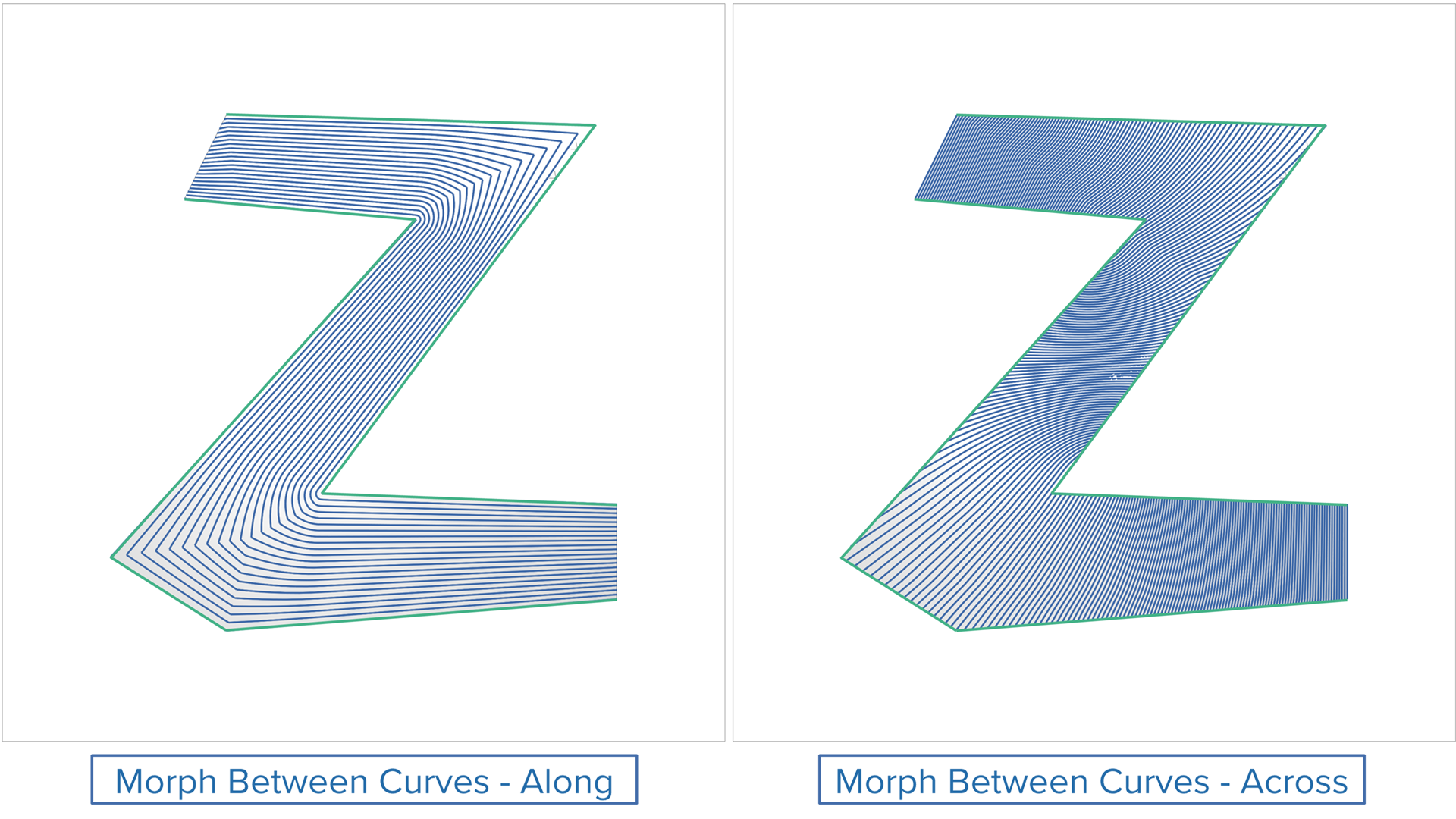
Challenge: Standard finishing patterns like Parallel Cuts or Constant Cusp can be limiting. When they do not align well with the part geometry, the result can be unwanted surface structures, inefficient retracts and reduced finishing quality.
Solution: This feature gives users full control to define the toolpath shape by selecting two guide curves. The toolpath smoothly morphs between them, adapting to the part’s form, and delivers a level of flexibility that traditional patterns cannot achieve.
Benefits: Eliminate unwanted surface structures from misaligned patterns, reduce unnecessary retracts by following natural part contours, and achieve superior surface finish quality on complex geometries, all with fewer manual adjustments.
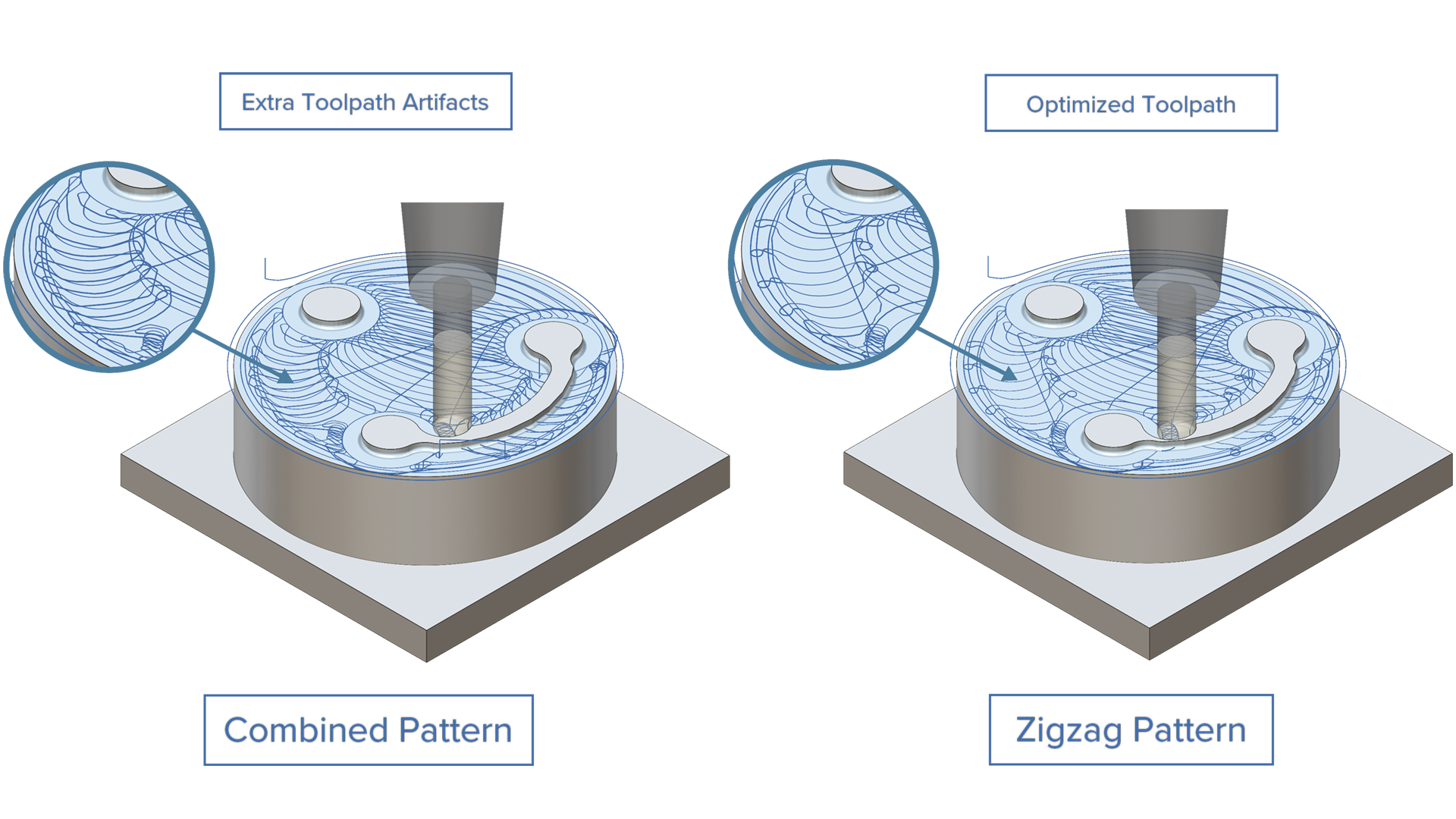
Challenge: Adaptive roughing toolpaths applied the same cutting method throughout, forcing either one-way or zig-zag machining for the entire part. This limitation increased machining time for parts with thin walls—requiring extra tool retracts, longer air moves, or inefficient cutting patterns that extended cycle times and raised manufacturing costs.
Solution: This new feature enables users to optimize the roughing process by applying zig-zag machining to thin walls and one-way machining to the rest of the toolpath.
Benefits: Optimize machining time by independently controlling cutting methods for thin walls versus bulk material. Reduce unnecessary tool retracts and air moves, cutting cycle time by 10-30% on parts with extensive thin wall features while maintaining surface quality and tool life.
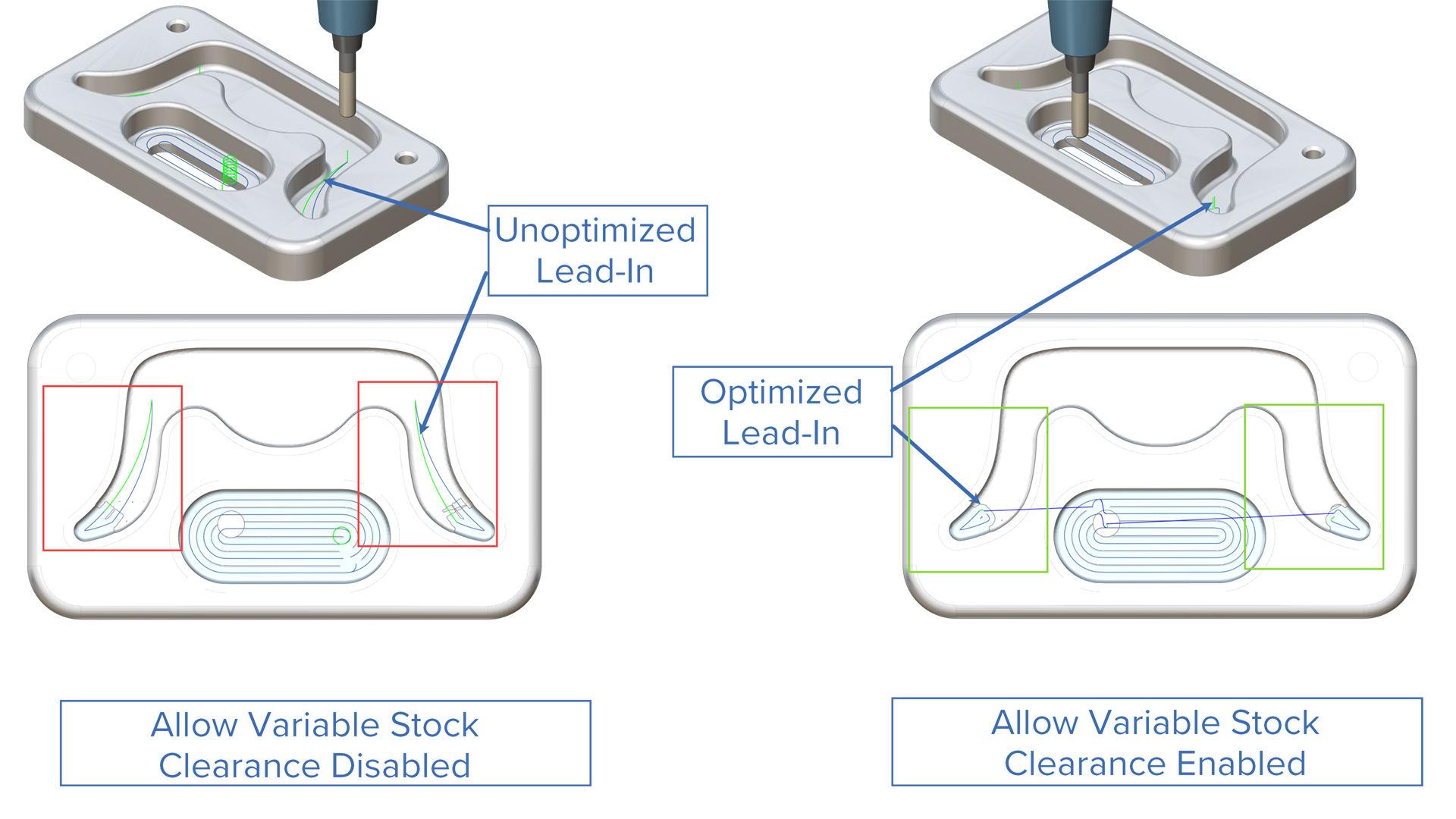
Challenge: When machining narrow slots or small holes, fixed stock clearance settings force unnecessarily long lead-ins, excessive ramping and increased air cutting.
Solution: The system now intelligently adapts stock clearance based on local geometry, e.g. it reduces clearance to enable shorter lead-ins in narrow areas and maintains standard clearance in open areas.
Benefits: Eliminating unnecessary air cutting and excessive ramping reduces cycle times. This new feature also saves programming time by removing the need for manual clearance adjustments.
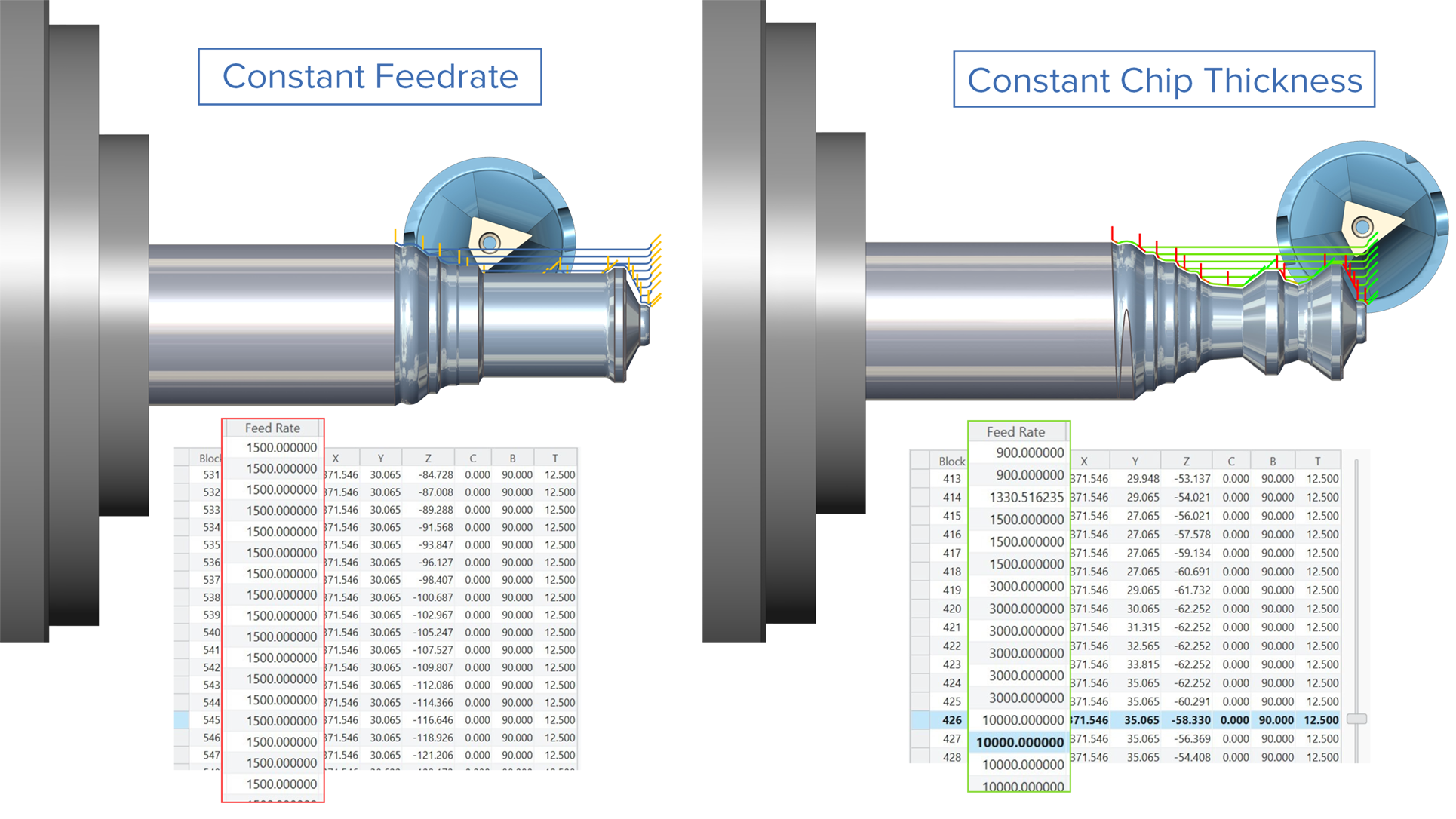
Challenge: Maintaining a constant feed rate while the cutting lead angle changes produces uneven chip thickness. This destabilizes cutting forces, increases tool wear, and creates inconsistent surface finishes.
Solution: Maintaining a constant feed rate while the cutting lead angle changes produces uneven chip thickness. This destabilizes cutting forces, increases tool wear, and creates inconsistent surface finishes.
Benefits: This feature extends tool life by ensuring consistent cutting forces, improves surface quality thanks to even chip loads, reduces thermal stress on cutting edges and improves chip evacuation.
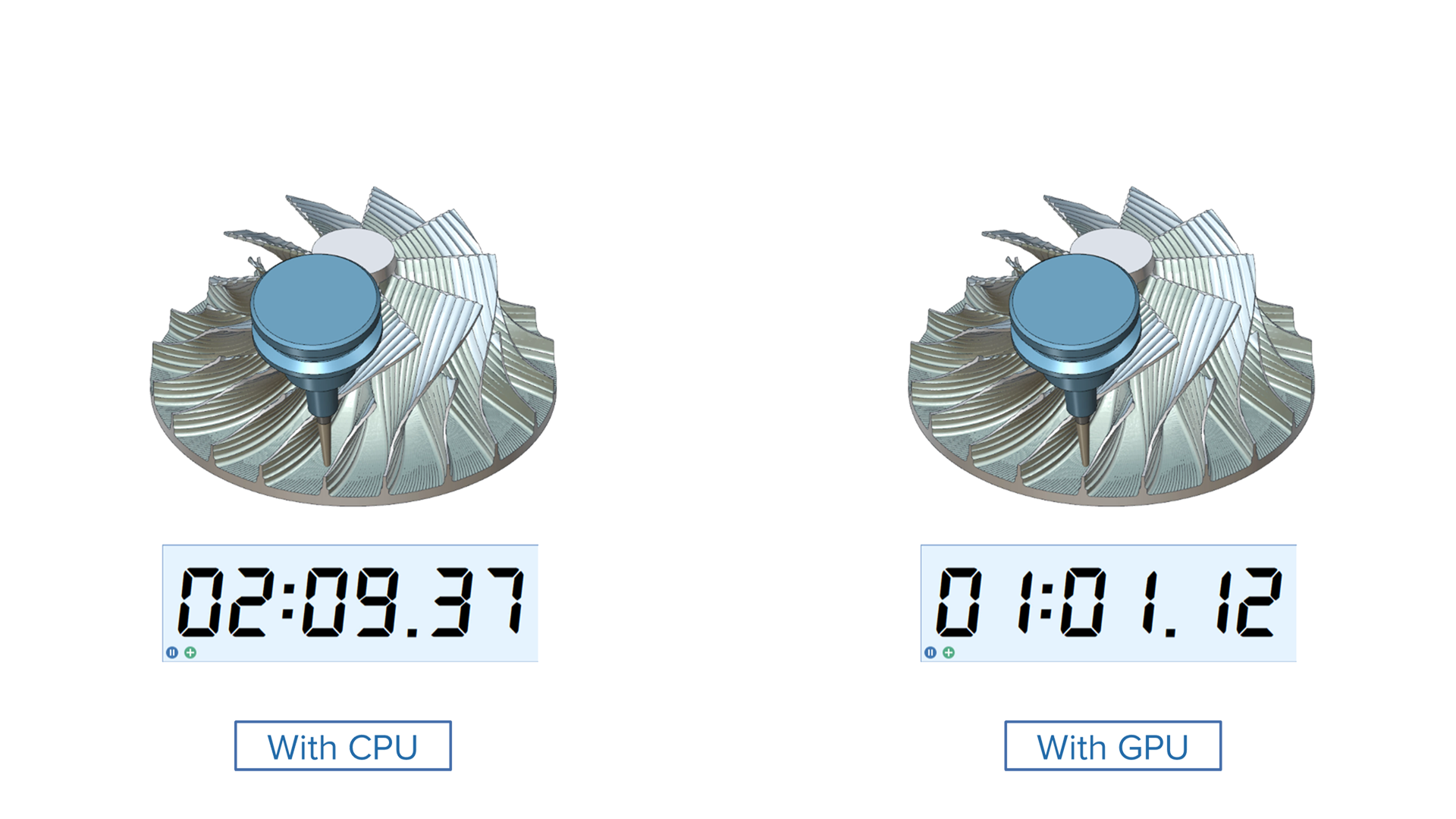
Challenge: CPU-based material removal in the Machine Simulation limits performance. It can cause delays and disrupt workflow momentum, especially when handling complex milling toolpaths and continuous collision checking between the tool and in-process stock.
Solution: Integrate GPU-accelerated cutting into the Machine Simulation environment, enabling GPU-accelerated computation of stock updates and collision detection for milling operations with parametric and mesh-based tools.
Benefits: This feature delivers significantly faster material removal in the Machine Simulation with support for both parametric and mesh-based tools with seamless fallback to the CPU for unsupported operations, thus helping users move from setup to decision faster.
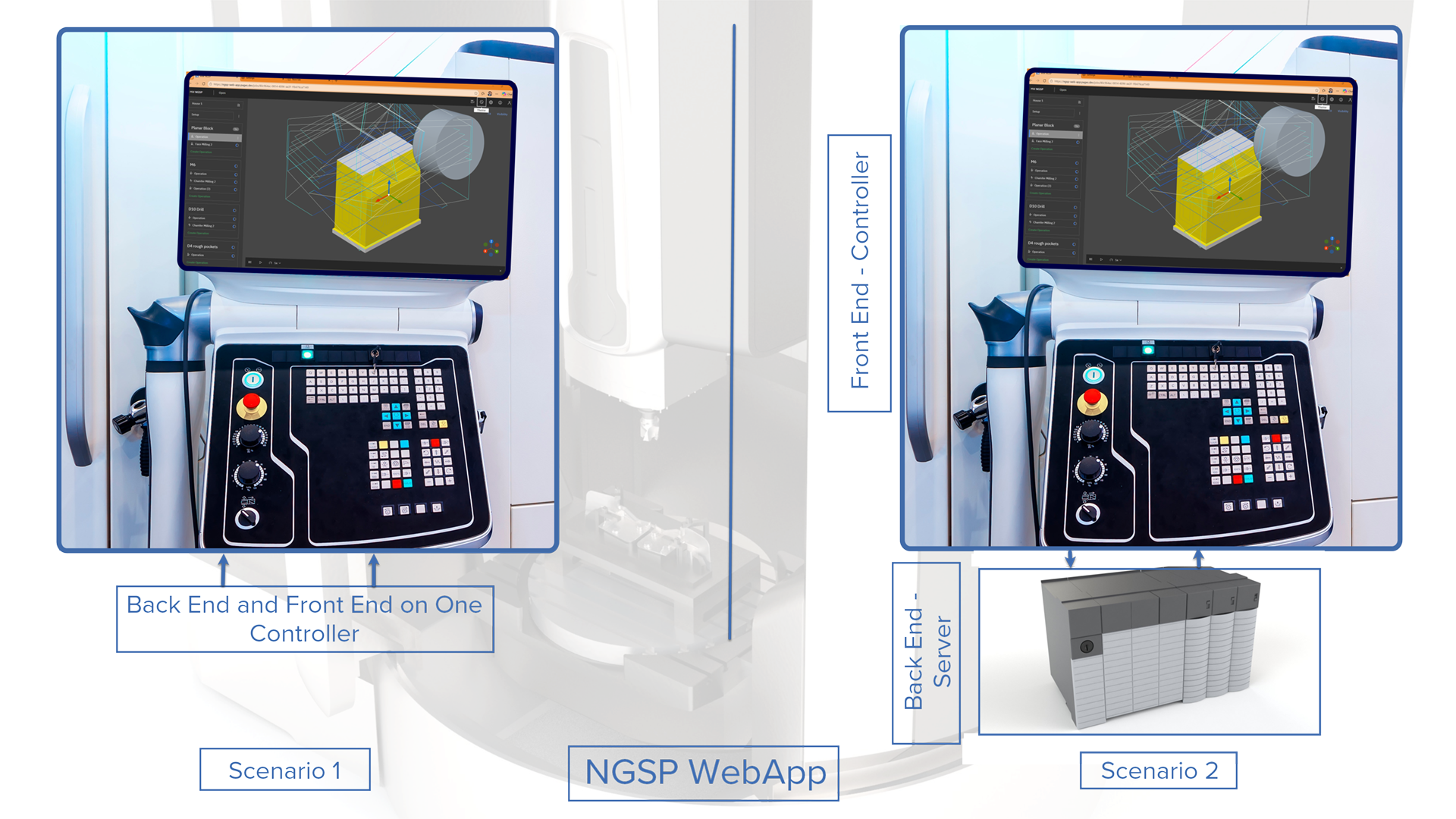
Challenge: The old WPF client locked NGSP to Windows and slowed down deployment, mobility, and integration.
Solution: The new web-based NGSP application runs on both Linux and Windows, with frontends optimized for flexible deployment on different devices and browsers.
Benefits: NGSP WebApp offers a plaform for long‑term growth and evolving IT infrastructures. It runs on any device under Linux or Windows, requires no installers, delivers a consistent user experience across different platforms and allows you to apply your own branding and language.
Discover the many other new enhancements in this release.